

The Role of Content in Modern SEO Strategy
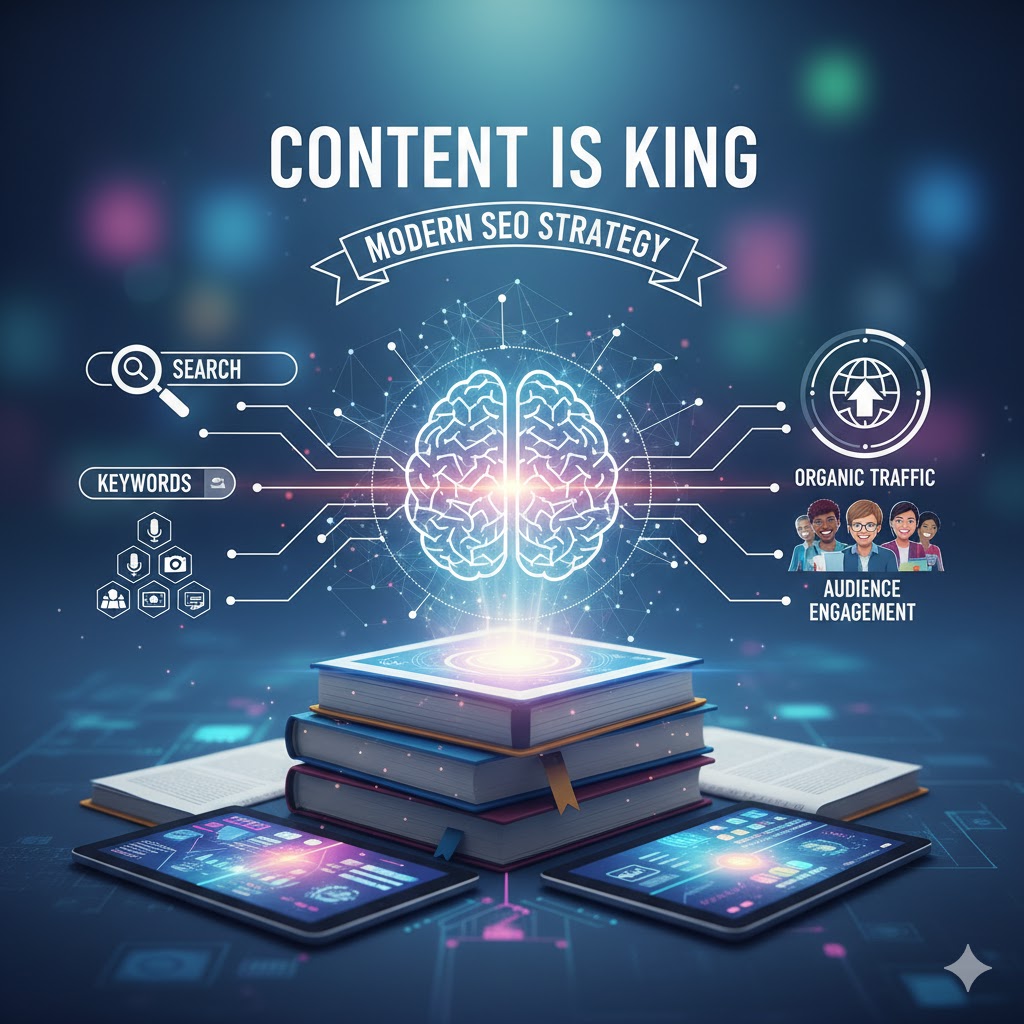
Quality content has become the driving force behind every successful digital presence. As search engines evolve, brands are learning that visibility is no longer about algorithms alone, it’s about creating meaningful experiences that help people find what they need with clarity and relevance.
This is why understanding the role of content in modern SEO strategy has become essential for businesses that want sustainable, long-term growth. Today’s search environment rewards authenticity, usefulness, and human intention placing content at the center of optimization.
Below is a comprehensive guide that explores how content, search behavior, technology shifts, and brand storytelling intersect to define modern SEO success.
Why Content Drives Modern SEO Strategy?
Search engines want to understand users. Users want to understand information.
Content is the bridge that makes both possible.
The evolution of search from keyword matching to intent-driven discovery means that the quality of content directly influences visibility. When people ask, “Why isn’t my site ranking?” the answer often lies in how effectively the content addresses what searchers actually want.
High-performing SEO today depends on content that:
- Aligns with user intent
- Integrates naturally with semantic search
- Supports topic authority
- Enhances on-page engagement
- Builds trust through expertise
This makes content the central engine of modern SEO, not an add-on.
How Search Intent Shapes Content Success?
Search intent has transformed how brands create digital experiences.
Instead of simply adding keywords, businesses now focus on crafting answers.
When a user types a query like “how to improve website ranking”, search engines evaluate:
- Relevance
- Depth
- Clarity
- Context
- User experience
In other words, the content must feel made for humans first.
A natural question emerges: How much should content focus on the user versus the algorithm? Modern SEO shows that when content is crafted primarily for users, algorithms respond positively as a result.
Search intent categories such as informational, commercial, and transactional guide writers toward building content that matches the psychology of the searcher. This alignment boosts performance across clicks, time on page, and engagement all of which enhance ranking signals.
Keyword Optimization in Modern SEO Content
Although SEO has evolved far beyond keyword stuffing, keywords still matter when used strategically.
Modern content uses:
- Semantic variations
- Contextual clusters
- Topic-driven keywords
- Natural language phrasing
Instead of repeatedly forcing primary keywords, the goal is to integrate them organically.
For this article, the highlighted keyword “content in modern SEO strategy” reflects the primary theme. Secondary keywords like “SEO content creation”, “optimized content strategy”, and “search intent content” enhance the thematic depth.
Search engines now use entities, relationships, and context. So the goal is not density alone, it’s meaning.
Building Topical Authority Through Content Depth
Search engines reward websites that demonstrate consistent expertise across a topic.
This is called topical authority.
When brands publish high-quality clusters around a core theme, they position themselves as subject matter leaders.
For example, a business that regularly creates meaningful pieces on SEO content creation develops strong authority signals around the subject. This supports ranking across a wider variety of related terms.
Topical authority grows through:
- Long-form guides
- Supporting articles
- Internal linking
- Relevance-driven content updates
- Consistent coverage of subtopics
The more valuable the content, the stronger the authority.
The Changing Role of AI in Content and SEO
AI tools have reshaped how content is produced, analyzed, and optimized.
However, the question arises: Does AI replace human creativity in SEO?
Not entirely.
AI assists with:
- Keyword discovery
- Topic clustering
- Draft generation
- Search behavior analysis
- Content gap detection
But human insight, originality, and brand-specific nuance remain irreplaceable.
AI-powered search including conversational and voice-driven discovery further elevates the importance of structured, easy-to-extract content. This has introduced the concept of AEO (Answer Engine Optimization), where content must not only rank but also respond quickly and clearly when users ask specific questions.
Writing Content That Answers Questions
Modern content must consider how voice assistants, AI search models, and semantic engines interpret information.
This means incorporating question-based patterns naturally within the article.
For instance:
What makes content essential for SEO today?
Content shapes relevance, trust, and authority key factors that search engines prioritize.
How does strong content support brand visibility?
By aligning with user intent and providing meaningful value that encourages deeper engagement.
These micro-answers align with AEO best practices, helping search engines understand context while serving readers in a conversational format.
Why User Experience Matters in Content-Driven SEO?
Well-written content alone is not enough if the on-page experience fails.
Modern SEO requires an integrated approach where:
- Reading flow is easy
- Paragraphs are short
- Headings are clear
- Navigation is intuitive
- Mobile experience is smooth
Search engines evaluate how users behave on a page. If people skim, leave quickly, or struggle to find answers, rankings suffer.
This is why content must be paired with UX readability and engagement are ranking signals as much as keyword relevance.
E-E-A-T: The Trust Framework Shaping Content Visibility
Expertise, Authoritativeness, and Trustworthiness remain central to SEO.
The modern landscape adds a fourth element: Experience.
Together, E-E-A-T influences how search engines measure content credibility.
Brands can strengthen E-E-A-T by:
- Demonstrating industry expertise
- Using credible author profiles
- Writing with clarity and transparency
- Sharing real-world experiences
- Offering well-structured explanations
Content aligned with E-E-A-T signals performs better organically because it establishes trust and reduces ambiguity for the reader and the search engine.
Content Formats That Strengthen Modern SEO Performance
There is no single format that drives SEO results.
Instead, strategic variety helps brands reach audiences across preferences and platforms.
High-performing formats include:
- Long-form guides
- Narrative articles
- Educational explainers
- Case studies
- Industry insights
- Step-by-step frameworks
- Comparison breakdowns
- Visual explainers
When a brand diversifies content, it expands search coverage across different intent layers, improving discovery and relevance.
How a Brand Used Content to Boost SEO Visibility?
Consider a mid-sized digital agency struggling with low organic traffic. Their website had technical optimization, but rankings weren’t improving.
Instead of focusing solely on backlinks or keywords, the agency built a robust content ecosystem based on:
- User intent
- High-value topics
- Content clusters
- Clear internal linking
- AEO-focused question integration
Within months, engagement metrics improved. Search engines recognized deeper topical relevance, leading to improved rankings across informational and commercial keywords.
The transformation shows how strategic content not isolated hacks shapes sustainable SEO.
How to Build an Optimized Content Strategy?
Creating an optimized content strategy starts with understanding the intersection of search behavior, user expectations, and competitive positioning.
A strong strategy includes:
- Topic mapping
- Persona alignment
- SEO-driven keyword research
- SERP analysis
- Writing guidelines
- Content refresh schedules
- Cross-platform distribution
- Engagement measurement
Each piece works together to ensure that content is not only created but also maintained, improved, and aligned with evolving search standards.
The Future of SEO Content
The future points toward:
- Deeper semantic personalization
- Natural language search
- Real-time query understanding
- Multimodal content discovery
- AI-integrated ranking models
As search becomes conversational and predictive, brands must produce content that is:
- Structured
- Clear
- Insightful
- Context-aware
- Human-centric
The evolution confirms a single truth: content remains the foundation of modern SEO regardless of technological shifts.
Closing Insight
Content is no longer just part of an SEO strategy, it is the strategy.
When brands commit to creating meaningful, intent-aligned, and well-structured content, they build long-term digital equity. Search visibility becomes a natural outcome of value delivered consistently and authentically.
Strong content doesn’t chase algorithms, it earns trust.
And in modern SEO, trust is the most powerful ranking factor of all.
