

From Keywords to Queries: The Shift Toward Intent Optimization
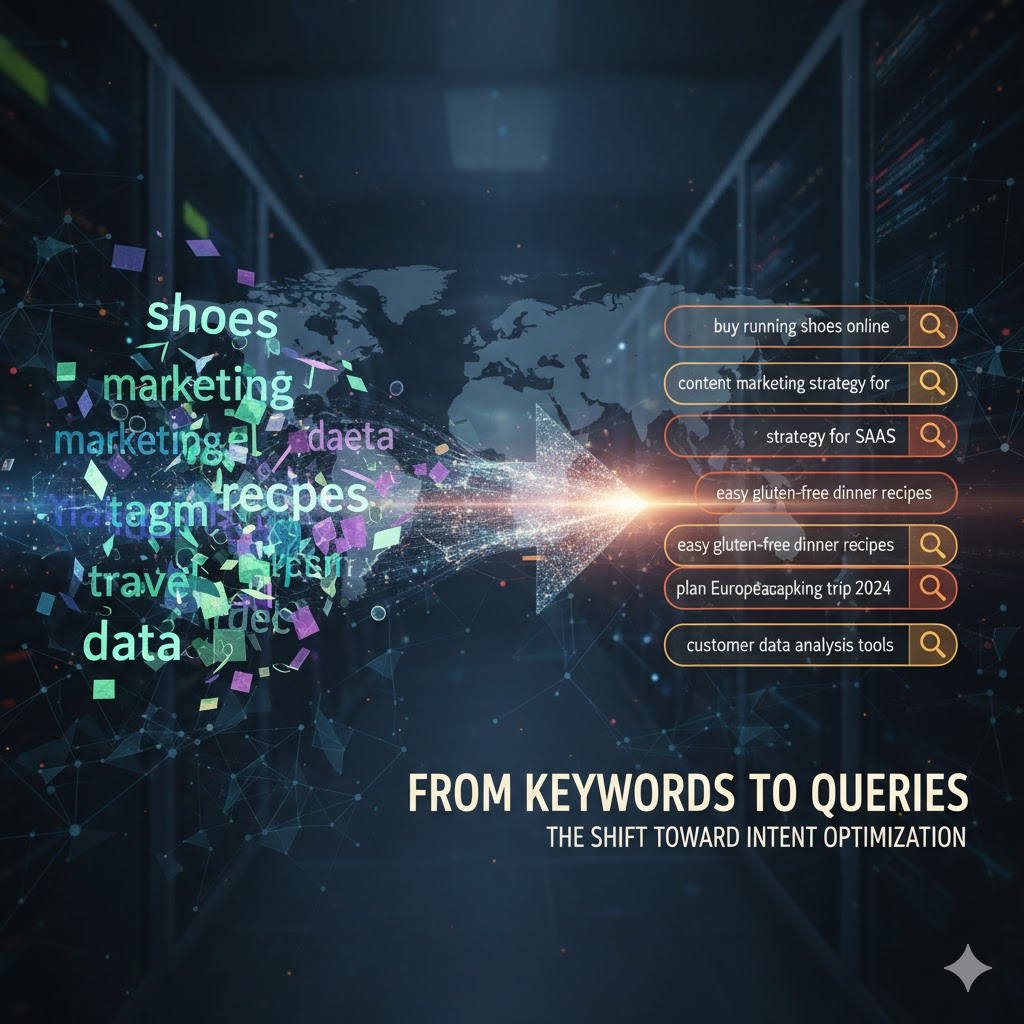
In the early days of SEO, success meant stuffing pages with the right keywords and hoping Google would notice. It worked for a while.
But today, the landscape has changed. Search engines have evolved from simple keyword matchers into sophisticated intent interpreters. They no longer ask “Does this page use the keyword?” but instead, “Does this page answer the question behind the search?”
At ByteMango, we’ve seen this transformation firsthand. The shift from keywords to queries from targeting phrases to understanding people defines the new era of search: Intent Optimization.
Why Intent Optimization Is the Future of SEO?
Let’s start with a foundational question: What is intent optimization, and why does it matter?
Intent Optimization is the process of aligning content with the purpose behind a search query the “why” instead of just the “what.”
When someone searches “best running shoes,” their intent might differ:
- They could want product comparisons.
- They might want reviews.
- Or they might just want to understand which shoes fit specific needs.
If our content doesn’t meet that intent even if it uses the right keyword, it won’t rank well.
That’s why modern SEO is no longer about “chasing keywords.” It’s about understanding human questions and delivering clear, context-rich answers.
From Keywords to User Intent
To understand the shift, we need to look at how search engines have evolved.
In the early 2000s, Google matched keywords literally. If someone searched “cheap hotels Paris,” the top results were those with that exact phrase repeated endlessly.
But with the introduction of semantic search and AI-driven algorithms like RankBrain, BERT, and now Gemini, search engines began interpreting meaning and context.
Now, instead of reading words, Google reads purpose.
This means the content that ranks highest is the one that answers why the user searched in the first place.
We’ve entered the age where SEO equals user understanding.
The Three Types of Search Intent
Before we can optimize for intent, we need to recognize its types. Every query falls into one of three core categories and often, success depends on matching the right one.
1. Informational Intent
Users want to learn something.
Example: “What is intent optimization?”
Our content should focus on education clear explanations, guides, or examples that help users understand.
2. Navigational Intent
Users are trying to find a specific brand or page.
Example: “ByteMango SEO services.”
These queries need optimized brand mentions, consistent metadata, and strong on-page navigation.
3. Transactional/Commercial Intent
Users are ready to act to buy, sign up, or compare options.
Example: “Best SEO tools for small businesses.”
Here, we focus on product features, benefits, pricing clarity, and calls to action.
Recognizing intent types lets us design the right experience one that satisfies both user needs and search engine expectations.
Why Traditional Keyword Strategies Are Losing Power?
Keywords aren’t dead but using them without context is.
One of the biggest mistakes brands make today is treating SEO like a checklist: insert keyword, adjust title, repeat. But Google now uses natural language processing (NLP) to understand meaning, not just phrasing.
That’s why two pages targeting the same keyword can perform very differently the one that answers intent wins.
So, instead of asking “How many times should we use a keyword?”, we should ask, “What does this searcher actually want to accomplish?”
Intent-first content makes search engines trust us because it makes users trust us first.
How ByteMango Approaches Intent Optimization?
At ByteMango, we’ve restructured our entire SEO process around understanding intent. Here’s how we make sure our content doesn’t just appear, it connects.
Step 1: Mapping Audience Intent
Before writing, we analyze what people are truly asking for.
We use AI-driven tools, search data, and predictive analysis to identify not only what users type, but also what they mean.
For example:
- A keyword like “SEO mistakes” could reflect frustration (intent: education).
- A query like “SEO services near me” signals readiness to convert (intent: action).
We map these variations into intent-driven clusters, ensuring every piece of content serves a specific purpose.
Step 2: Structuring Content to Match Intent Flow
Each section of our content is designed to mirror how users search.
We begin with clear, direct answers and expand with context.
If a user searches “What is intent optimization?”, we answer it within the first 100 words, then elaborate with examples, case studies, and insights.
This “inverted pyramid” approach satisfies AI-driven Generative Search Engines like ChatGPT and Gemini, which favor concise, structured information.
Step 3: Using Semantic SEO and Topic Clusters
We connect related topics through internal links and semantic clusters, helping search engines understand our authority in the space.
For instance, if we publish:
- “From Keywords to Queries”
- “How to Master Search Intent in SEO”
- “Building a Content Strategy for AI Search”
Each piece links to the other, forming a contextual web that reinforces relevance.
This strategy ensures Google and AI models see us not as a page but as an expert source.
Step 4: Crafting Conversational Content
Intent optimization also means writing like a human, not a keyword generator.
Users ask questions conversationally: “How do I improve my SEO rankings?” or “Why isn’t my website showing up on Google?”
By structuring content in Q&A form, we make it more digestible for both users and AI-driven search systems.
We don’t just answer, we anticipate.
That’s how we ensure ByteMango’s content is voice-search-ready and aligned with modern discovery trends.
Step 5: Analyzing Behavioral Metrics
Intent is verified through behavior.
If users spend time reading, engaging, and clicking deeper into our site, it signals satisfaction and Google notices.
We track:
- Average session duration
- Scroll depth
- Click-through from featured snippets
These metrics help us refine intent matches and improve clarity over time.
In intent-driven SEO, data becomes direction.
Common Mistakes in Intent Optimization
Just like early SEO had pitfalls, intent-based optimization comes with its own challenges. Here are a few we’ve learned to avoid:
- Assuming all keywords share one intent – each phrase may have multiple motivations.
- Creating one-size-fits-all content – one page can’t serve every intent type.
- Ignoring SERP cues – search results themselves reveal what users expect.
- Overcomplicating language – intent clarity thrives on simplicity.
When we design with empathy understanding what users need, we naturally align with how algorithms interpret relevance.
From Keyword Focus to Intent-Driven Growth
When we helped a SaaS client transition from keyword-heavy blogs to intent-based content, the results were transformative.
Previously, their posts ranked for terms like “project management software,” but failed to convert. Once we segmented user intent awareness, comparison, and purchase and tailored content accordingly, everything changed.
Within four months:
- Organic traffic grew by 58%
- Average session time doubled
- Conversion rates improved by 32%
The takeaway? Intent doesn’t just boost rankings, it improves resonance.
How Intent Optimization Connects to Generative Search?
With the rise of Generative Search Engines like ChatGPT, Gemini, and Bing Copilot, understanding intent is now essential for AEO (Answer Engine Optimization).
AI tools don’t pull random data; they pull the most relevant, intent-matching answers.
That means if our content clearly communicates purpose through structured data, Q-driven formatting, and authoritative tone, it’s more likely to be cited in AI-generated responses.
Intent optimization is no longer optional. It’s our access point to the AI-driven web.
The Human Side of Search
The future of search isn’t just algorithmic, it’s empathetic.
When we shift our mindset from “keywords” to “queries,” we stop chasing search engines and start serving people.
That’s the real heart of intent optimization.
At ByteMango, we’ve embraced this evolution fully designing content that doesn’t just rank, but resonates.
Because when we understand the “why” behind a search, we don’t just appear in results, we become the result.
