

Building SEO Authority: Strategies That Actually Work
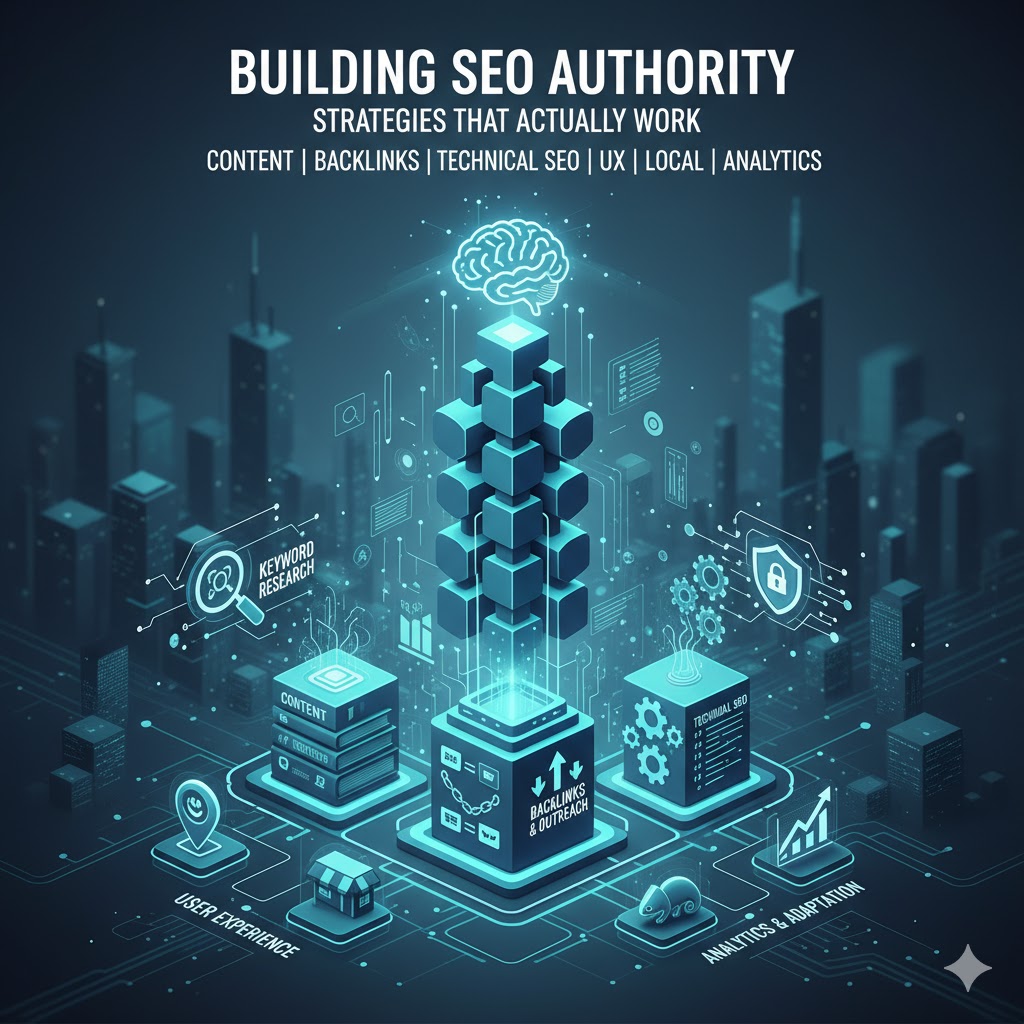
Establishing SEO authority has become one of the most defining elements of digital success. Search engines reward brands that demonstrate clarity, consistency, trust, and relevance but many businesses still struggle to understand what “authority” really means in a modern, algorithm-driven landscape.
Authority isn’t a checkbox.
It’s a reputation built over time, shaped by the way you create content, structure your website, engage your audience, and position yourself within your industry ecosystem.
This guide walks through practical, realistic strategies that help brands strengthen their SEO authority, supported by narrative insights and natural Q/A patterns so readers can understand not just what works but why it works.
What Does SEO Authority Actually Mean Today?
The term SEO authority often gets oversimplified. Some believe it’s entirely about backlinks. Others think it’s tied to content length or keyword count. Search engines, however, evaluate authority through a mix of trust signals that reflect your website’s credibility and your brand’s reliability.
So… how does a website prove it’s authoritative?
It happens through a combination of:
- Demonstrating expertise with high-quality, structured content
- Maintaining technical consistency across your website
- Earning signals of trust from external sources
- Building topic depth so search engines can understand your niche
- Creating a user experience that reinforces reliability
Authority grows when your digital presence consistently aligns with the expectations users and algorithms have for trustworthy information.
Why Is SEO Authority More Important Than Ever?
Competition online has exploded.
Search engines now rely more heavily on authority metrics to determine which sources deserve to appear at the top of results.
This shift occurred because:
- More people rely on search for decision-making
- Content creation has become easier, leading to oversaturation
- Platforms want to highlight trustworthy, dependable information
- Google and other engines prioritize brands with long-term consistency
As a result, businesses that invest in SEO authority gain sustainable visibility. Those that don’t often struggle to maintain ranking stability.
Building a Strong Technical SEO Framework
Before content, backlinks, or branding, a site must be technically sound. Technical SEO is the backbone that allows authority signals to function effectively.
Here are core pillars that directly affect your SEO authority:
1. Site Architecture and Crawlability
Search engines must navigate and understand your website efficiently.
Clear structure equals higher trust.
Strong architecture includes:
- Logical category hierarchy
- Flat navigation where most pages are accessible within 2–3 clicks
- Internal linking pathways that help search engines map your topic clusters
- A consistent URL structure
Search algorithms interpret well-organized websites as reliable, making architecture a key driver of authority.
2. Page Speed and Core Web Vitals
When your pages load slowly, authority suffers.
Fast load times signal reliability and user-centered design.
Prioritize:
- Optimizing images
- Using efficient hosting
- Reducing script bloat
- Maintaining server responsiveness
A site that loads quickly appears more dependable, which strengthens authority.
3. Mobile-First Experience
Most searches now begin on mobile devices.
Search engines assign greater authority to websites that offer seamless mobile experiences.
Key considerations include:
- Adaptive layouts
- Mobile-friendly typography
- Simplified navigation
- Button-friendly spacing
If mobile experience fails, authority and ranking both decline.
The Role of Content in Shaping SEO Authority
Content remains the most influential element in building SEO authority because it’s how a brand demonstrates expertise and value.
Authority grows through content that:
- Answers real user questions
- Covers topics with depth and clarity
- Remains consistent over time
- Reflects genuine understanding of the subject matter
Let’s break the content strategy into meaningful layers.
Layer 1: Topic Ownership Through Deep Content
To build SEO authority, a brand must demonstrate mastery of a specific niche. Modern algorithms reward websites that cover topics fully rather than sporadically.
This involves:
Developing Topic Clusters
A topic cluster is a group of interlinked articles surrounding a central theme.
Why do topic clusters increase authority?
Because they:
- Show depth instead of surface-level coverage
- Help algorithms identify your core expertise
- Improve user navigation
- Build semantic relationships that strengthen rankings
A website with one article on a topic signals interest.
A website with 20 interlinked articles signals authority.
Structured, Intent-Based Content Writing
Intent matters more than keywords.
Questions like:
- “What does a reader truly want to achieve?”
- “What problem is this search trying to solve?”
- “What perspective will demonstrate expertise?”
drive better authority than keyword placement alone.
Maintaining Consistency Over Time
Authority doesn’t grow from isolated bursts of activity.
It grows from consistent, steady publishing and updating.
Layer 2: The Power of User-Focused Content Design
Authority isn’t just about the information you provide, it’s about how users interact with it.
Content that is:
- Easy to skim
- Structured with logical flow
- Designed with strategic headings
- Supported by clear internal linking
signals trustworthiness by guiding users intuitively.
A question often raised in SEO strategy discussions is:
“Does user experience directly impact authority?”
The answer: yes — indirectly.
Search engines interpret user engagement as a proxy for trust.
When users stay, scroll, read, and return, your authority grows.
Layer 3: Updating and Refreshing Content Regularly
Authoritative websites maintain relevance.
Updating older articles helps search engines see your site as:
- Current
- Accurate
- Actively maintained
Regular updates tell algorithms that your brand consistently invests in information quality, a foundational component of SEO authority.
Authority Through Trust Signals: Backlinks, Mentions & Relationships
Backlinks remain one of the strongest trust signals online, but they work best when earned naturally.
High-Quality Backlinks Matter More Than Volume
An authoritative link from a reputable website holds more weight than dozens of low-value links.
Strategies that attract strong backlinks include:
- Creating insightful research-based content
- Building shareable guides and frameworks
- Publishing industry opinions or thought leadership
- Partnering with other brands for collaborative content
- Offering expert commentary
Search engines analyze not just the number of links, but the context, relevance, and reputation of the linking page.
Brand Mentions Without Links
Even unlinked brand mentions contribute to authority.
Search engines increasingly interpret mentions as indicators of credibility, especially when they appear on trustworthy sites.
Relationship Building Over Link-Building
Genuine industry relationships create organic authority.
This includes engaging in:
- Podcasts
- Interviews
- Webinars
- Guest collaborations
- Community forums
The more visible your brand becomes across the digital ecosystem, the stronger your SEO authority grows.
Building Topical Relevance for Long-Term Authority
Topical relevance is the connective tissue between content, authority, and ranking consistency.
Why Topical Relevance Matters?
Search engines use topical relevance to understand:
- What your site is about
- How deeply you understand your industry
- How your content relates to other content online
A site with strong topical relevance signals reliability.
Methods for Increasing Relevance
- Group articles around primary themes
- Answer adjacent questions within the same niche
- Use internal linking to show relationships
- Highlight your primary SEO authority keyword throughout the site naturally
How Questions Strengthen Authority?
Answer Engine Optimization (AEO) focuses on how content helps algorithms directly answer user questions. This naturally reinforces authority.
Integrated questions such as:
- “How does a brand improve its SEO authority?”
- “What are the signals search engines trust most?”
- “Why do some websites rank even without many backlinks?”
serve algorithmic needs while improving human comprehension.
Creating content that answers questions clearly within the narrative flow makes your site more trustworthy.
GEO Optimization: Local Authority Signals That Matter
GEO optimization strengthens authority within defined locations.
Local authority relies on:
- Region-specific landing pages
- Localized keywords
- Culturally relevant examples
- Local citations and brand mentions
- Google Business Profile completeness
A brand with strong GEO signals demonstrates reliability within a community — a vital aspect of localized authority.
AI’s Role in Enhancing (Not Replacing) SEO Authority
AI should support human expertise, not replace it.
Its value lies in:
- Structuring outlines
- Analyzing semantic patterns
- Identifying topic gaps
- Improving workflow efficiency
But authority requires human insight, industry experience, and brand voice.
AI amplifies these elements — it doesn’t generate them alone.
How Authority Transforms Visibility?
Imagine a small consulting company that publishes sporadic articles.
They receive moderate traffic, but rankings fluctuate.
Now imagine the same company implementing:
- Topic clusters
- Structured internal linking
- Regular content updates
- Guest contributions
- User-centric content formatting
Within months, search engines identify the brand as a subject-matter leader.
Traffic becomes more stable.
Rankings rise.
Other websites begin referencing the company’s insights.
This transformation occurs because authority compounds.
The more consistently you show what you know, the more your digital presence benefits.
Practical Steps to Start Building SEO Authority Today
- Identify your core topic areas
- Create clusters around them
- Improve technical foundations
- Refresh existing content
- Earn mentions and backlinks naturally
- Strengthen local signals
- Use AI for structure, not substance
- Maintain consistent publishing
- Review user behavior patterns
Authority is gradual, but every step reinforces your digital identity.
FAQs
1. How long does it take to build SEO authority?
It varies, but consistent effort over several months typically shows measurable improvement.
2. Is content or backlinks more important for authority?
Content forms the foundation; backlinks amplify it.
3. Do small businesses need SEO authority?
Yes, authority helps brands of all sizes compete effectively.
4. Can a website rebuild authority after a drop?
Yes, through updates, new content, improved technical SEO, and rebuilding trust signals.
5. Does search intent affect authority?
Absolutely. Intent-aligned content builds stronger topical relevance.
A Forward-Looking Approach to SEO Authority
Digital authority isn’t a one-time achievement.
It’s a long-term commitment to clarity, relevance, and value.
Businesses that invest in authority don’t just rank they earn trust, build credibility, and create sustainable visibility.
