

The Complete Guide to Modern Digital Visibility Strategies
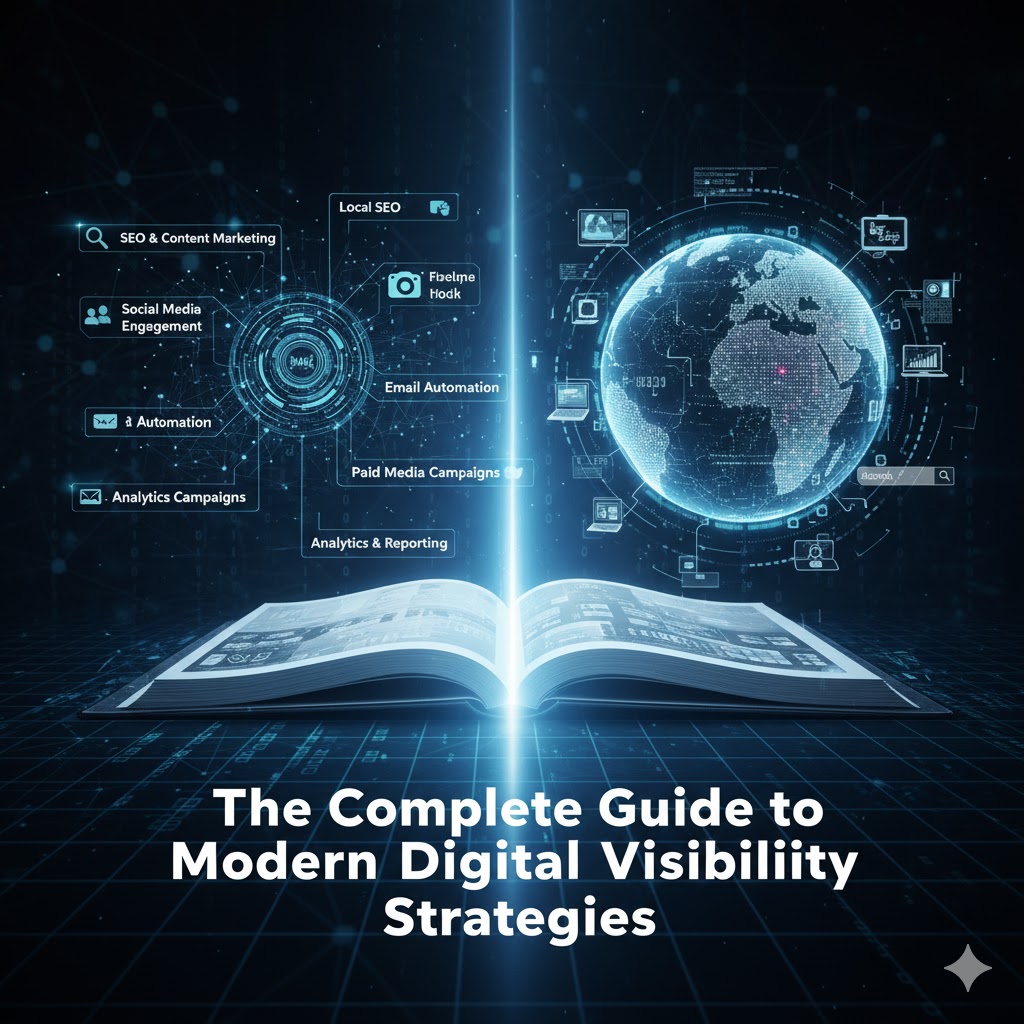
Before we dive into a full framework of modern visibility, we want to set the stage clearly.
Today’s digital world moves faster than any single channel, algorithm, or trend. As brands, marketers, and creators, we no longer compete on content volume alone, we compete on discoverability, authority, and experience.
Visibility is no longer about shouting louder. It’s about being found naturally, valued instantly, and remembered repeatedly.
That is the philosophy guiding our complete guide to modern digital visibility strategies, built around intentional content, technical clarity, and audience-first design.
What Modern Digital Visibility Really Means?
When we think about digital visibility, it’s tempting to limit it to rankings or followers. But we know visibility now operates on three interconnected layers:
- Search Visibility (SEO) – how easily audiences discover us when they need answers.
- Experience Visibility (AEO) – how well our content matches user intent, including voice assistants.
- Local & Contextual Visibility (GEO) – how accurately platforms identify our relevance to a specific place or community.
These layers influence one another. When we strengthen one, we strengthen the entire ecosystem.
This guide breaks down every major component so we can build a durable visibility engine for the long term.
Why Digital Visibility Has Become a Strategy, Not a Tactic?
Modern audiences don’t follow linear journeys. They might hear about us on social media, look us up on mobile search, scroll through our reviews, and then check our credibility on LinkedIn.
So the question becomes:
“How do we make each touchpoint discoverable, relevant, and frictionless?”
Because visibility is not a posting schedule.
It’s not a single campaign.
It’s a system of aligned efforts across platforms, formats, and intent.
This is the mindset behind our complete guide.
The Pillars of Modern Digital Visibility
To build a strong foundation, we structure our strategy around six pillars:
- Authority
- Search Intelligence
- Audience Mapping
- Content Architecture
- Signal Optimization (SEO, AEO, GEO)
- Experience Consistency
Let’s unpack these in the same structured, practical way we use in our own workflows.
Understanding Digital Authority: The Core of Being Found
Digital authority is our perceived credibility in the eyes of both audiences and algorithms.
We strengthen this through:
1. Consistent Expertise
We show depth, not just presence.
Publishing content that answers real questions organically builds trust across platforms.
2. Proof of Relevance
Reviews, mentions, citations, and brand signals tell search engines that our voice matters.
3. Long-Term Identity
Our digital footprint profiles, descriptions, content patterns, and engagement establishes who we are and what we stand for.
When authority becomes the foundation, visibility becomes predictable.
How We Align With Real User Behavior?
Search intelligence means understanding how people search, what they expect, and how they evaluate answers.
To build search intelligence into our strategy, we focus on:
1. Query Intent Clarity
Every piece of content must ask:
“Is my audience looking to learn, buy, compare, or solve?”
2. Topic Clusters
Instead of publishing random posts, we create interconnected ecosystems around major themes.
3. Relevance Signals
We use structured data, semantic keywords, and content relationships to help algorithms understand our context.
4. AEO-First Thinking
We optimize for concise, natural-language answers to meet voice and assistant-based searches.
This is how we align with the future of search.
The Hidden Layer of Visibility
We increase visibility not by targeting everyone but by understanding exactly who needs what.
1. Behavior Patterns
What questions are they asking?
What platforms do they use?
How fast must we deliver value?
2. Problem Pathways
Visibility improves when our content aligns with the specific stage of their problem.
3. Channel Compatibility
Not every audience wants long-form reading.
Some prefer audio. Some rely on mobile.
We match our format to their consumption style.
This is where most visibility strategies fall short but ours doesn’t.
Content Architecture: Designing for Discovery
Great content is only visible when it’s structured for both humans and algorithms.
1. Hierarchical Structure
Headings, subheadings, and concise paragraphs improve readability and indexing.
2. Semantic Reinforcement
We weave our primary keyword and secondary keywords naturally across multiple sections.
3. Internal Ecosystems
Our content interlinks intentionally to create thematic authority.
4. Experience Flow
We keep paragraphs short, tone conversational, and ideas progressive to maintain reader engagement.
Visibility is never accidental, it’s engineered.
A Strategic Layer, Not Just Technical Steps
SEO today is a blend of relevance, clarity, and contextual intelligence.
We approach it through four core components:
1. On-Page Strategy
We focus on headings, structure, keyword placement, and semantic context.
2. Content Depth
We ensure every piece provides genuine value not filler text.
3. Crawlability
Clean URLs, efficient sitemaps, and fast-loading pages make it easier for search engines to understand our content.
4. Adaptive Optimization
As algorithms evolve, we adapt our tone, structure, and keyword patterns.
With this approach, SEO becomes a continuous cycle of refinement and reinforcement.
Optimizing for Human-Like Queries and Assistant Responses
As conversational search grows, Answer Engine Optimization (AEO) is no longer optional.
AEO focuses on clear answers, contextual questions, and structured responses, including:
- short Q/A style inclusions
- concise definition-based paragraphs
- natural phrasing
- clean hierarchy
For example, we integrate questions such as:
“What makes digital visibility challenging today?”
And we answer them directly in the text, without separate FAQ sections.
AEO improves our chances of earning featured snippets, voice responses, and AI-generated summaries.
Strengthening Local and Contextual Discoverability
Our GEO optimization ensures we appear in the right places, at the right time, for the right audience.
We build this through:
1. Accurate Business Signals
Our address, service regions, and categories must remain consistent everywhere.
2. Local Keyword Context
We include natural geographic references where relevant.
3. Cultural Relevance
Local examples, terminology, and nuances help our content connect authentically.
GEO matters even for digital-first brands relevance is always location-aware.
Building an Integrated Digital Visibility Strategy
To create a system that works across platforms, we use a combined approach:
1. Unified Brand Voice
Our tone, vocabulary, and value proposition stay consistent.
2. Multi-Channel Visibility
We maintain presence across search engines, social platforms, and directories.
3. Experience Continuity
Every click from blog to website to social post feels like one seamless journey.
4. Data-Conscious Adjustments
We review what works and refine what doesn’t.
Modern visibility is not one action, it’s a continuous, intentional process.
How We Build Visibility Step by Step?
We use a repeatable six-step workflow:
Step 1: Define the Visibility Goal
Do we want awareness, traffic, conversion, or identity?
Step 2: Build the Visibility Core
We refine messaging, relevance, and search intent alignment.
Step 3: Architect the Content Ecosystem
We cluster ideas around strategic themes.
Step 4: Strengthen SEO, AEO, and GEO Signals
We place keywords naturally and reinforce contextual clarity.
Step 5: Deploy Across Channels
Blogs, social posts, directories, and multimedia work together.
Step 6: Monitor, Optimize, Repeat
Visibility thrives through consistency, not intensity.
AI and Digital Visibility: The Dedicated Section
AI now influences discovery more than ever. We integrate AI strategically without making it our entire identity.
1. Predictive Content Needs
AI tools help us anticipate audience questions and trends.
2. Semantic Search Compatibility
AI-driven search rewards clear structure and contextual relevance.
3. Voice + Assistant Optimization
AEO becomes essential as assistants generate direct responses.
4. Acceleration, Not Automation
AI enhances our workflow, but our insights remain human-led.
AI doesn’t replace strategy, it strengthens it.
Real-World Visibility Scenario
Problem:
A growing consultancy published regular content but struggled to appear in relevant searches. Their visibility was inconsistent, and their audience couldn’t find their expertise.
Solution:
We redesigned their content architecture, strengthened semantic clarity, integrated AEO questions across articles, and updated their GEO signals. Within weeks, their content ecosystem began ranking for tightly aligned queries. Their visibility no longer depended on viral moments, it became stable, predictable, and scalable.
This is the power of strategic visibility.
FAQs
Q: Why is digital visibility so fragmented today?
A: Because audiences move across multiple platforms, and each has its own discovery system.
Q: How do we create consistency across channels?
A: By developing a unified voice and a structured content plan.
Q: What makes GEO important even for online brands?
A: Algorithms still need contextual signals to determine regional relevance.
Q: How do SEO, AEO, and GEO work together?
A: They strengthen each other through structured clarity, natural phrasing, and contextual relevance.
These questions help our content earn richer visibility across search and assistant platforms.
Visibility Is a Living System
When we talk about modern digital visibility, we’re not talking about hacks or shortcuts.
We’re talking about building a living system that evolves with our audience, adapts to algorithms, and strengthens our authority over time.
Visibility is no longer about being everywhere.
It’s about being everywhere that matters.
And with the right combination of SEO, AEO, and GEO intelligence, we can build that presence with intention, clarity, and long-term value.
