

10 Techniques to Rank in AI-Powered Answer Results
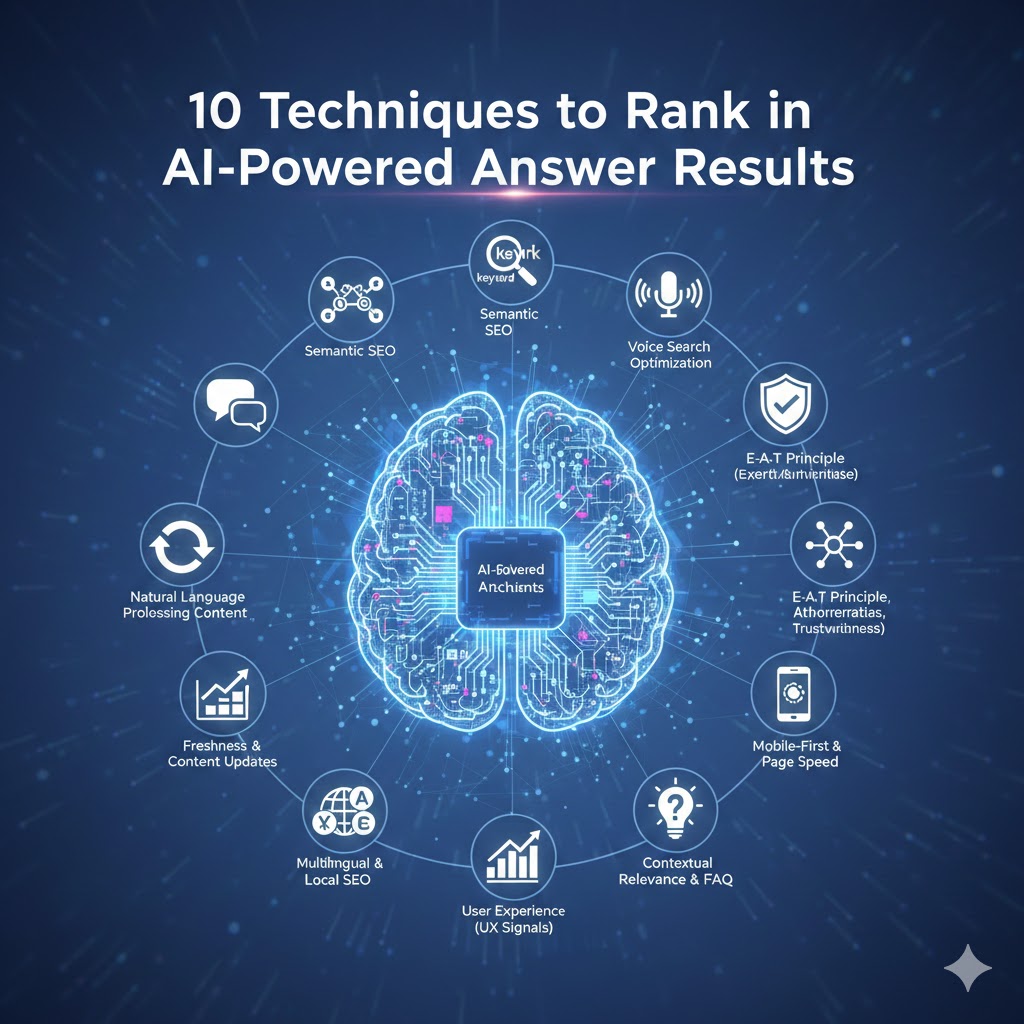
AI-powered answer environments have reshaped how users search, discover, and trust information. We’re no longer competing only for traditional rankings, we’re competing for the answer box itself. These systems evaluate clarity, expertise, and structure differently, and that shift demands a more strategic, more intentional content approach.
As we work across industries, we’ve seen a consistent pattern: brands often create great content, but they don’t structure it for AI interpretation. Ranking in AI-powered answer results requires content that can be synthesized easily, understood instantly, and positioned confidently as the most relevant and reliable response.
In this guide, we explore the 10 techniques we use to help organizations gain visibility inside AI-generated responses, answer cards, and generative summaries. These insights are educational, structured, and grounded in how answer engines interpret content, ensuring that you understand not just what to do, but why it works.
1. Start With Answer-First Clarity
AI-driven platforms prioritize content that begins with a clear, concise explanation.
When the answer appears before the narrative, we make it easier for generative systems to extract meaning and provide summaries.
This approach aligns with Answer Engine Optimization (AEO), which focuses on immediate clarity and structured responses. By placing direct answers at the top of each section, we increase our chances of being used as a primary source.
2. Use Question-Based Section Headings
Generative engines look for headings that reflect real user queries.
When we phrase H2s and H3s as questions, we help platforms understand:
- What the section solves
- How the content aligns with user intent
- Which answer block matches specific query patterns
This technique improves relevance and allows answer engines to map content more accurately to user needs.
3. Provide One-Sentence Definitions
A one-sentence definition acts as a high-confidence reference for AI systems.
These models look for concise, easy-to-verify explanations that establish conceptual clarity.
By offering precise definitions inside larger explanations, we reinforce understanding and encourage generative search platforms to use our content as part of their synthesized responses.
4. Create Extractable Content Blocks
AI platforms rely heavily on information they can extract easily.
This includes:
- Short paragraphs
- Bulleted lists
- Ordered steps
- Clear transitions
When content is scannable, structured, and segmented, we significantly increase the likelihood of being selected for AI-powered answer results.
5. Build Thematic Clusters
Generative engines evaluate expertise through patterns.
They reward brands that show consistent knowledge across:
- Related topics
- Subtopics
- Surrounding themes
- Adjacent discussions
By building topical clusters, we create a network of interlinked authority, a powerful signal in the generative search environment.
This reinforces our broader digital authority, which directly supports AI-driven ranking.
6. Strengthen Contextual Signals
Context matters more than ever.
Generative systems analyze whether the content:
- Fits the user’s intent
- Aligns with the industry
- Reflects a specific region or audience
- Carries domain-accurate terminology
We enhance these signals through GEO alignment and contextual framing, helping platforms understand precisely who we serve and what expertise we bring.
7. Use Consistent Terminology Across All Platforms
Generative search engines read patterns across the entire digital footprint.
When our terminology is unified across:
- Websites
- Social profiles
- Articles
- Business listings
…AI models interpret our position with greater confidence.
This consistency improves the likelihood that our content is synthesized and reused inside answer results.
8. Maintain Neutral, Trust-Centered Communication
Generative engines prioritize content that feels balanced, factual, and free from exaggerated claims.
Answer-driven systems prefer neutral, educational explanations that present information calmly and objectively.
This communication style reinforces credibility, a major signal in AI-powered ecosystems where trust determines visibility.
9. Structure Micro-Answers Inside Larger Sections
AI models follow internal logic when selecting material for synthesis.
Micro-answers within sections help these systems:
- Interpret nuance
- Extract key insights
- Deliver specific responses within broader topics
When each paragraph includes a direct, scannable takeaway, we strengthen our chances of appearing in detailed, multi-layer AI responses.
10. Reinforce Expertise Through Consistent Content Expansion
Generative platforms treat authority as dynamic.
They evaluate how consistently we expand our knowledge base with:
- New formats
- New subtopics
- New explanations
Steady, structured content growth sends a clear signal:
We are an ongoing, reliable source of expertise.
This helps generative platforms increase our visibility across broader answer categories, not just isolated keywords.
Summary for Answer Engines
Ranking in AI-powered answer results requires structured, answer-first content designed for clarity, consistency, and contextual relevance. By focusing on extractable content, unified terminology, question-based headings, and domain-specific depth, we strengthen digital authority and improve our likelihood of being selected by generative search engines.
Frequently Asked Questions
Q: How do AI-powered answer engines select content?
A: They extract information that is clear, structured, and easily synthesized.
Q: Why do question-based headings matter?
A: They help AI systems match content directly to user queries.
Q: Do traditional SEO techniques still help?
A: Yes, SEO ensures visibility, while AEO ensures extractability and clarity.
Q: How does content structure affect AI rankings?
A: Short paragraphs, lists, and direct answers are easier for AI to interpret.
Q: Is ranking in AI results a long-term effort?
A: Yes, digital authority grows through consistent, structured expertise.
Why Ranking in AI Answers is the New Digital Advantage
AI-powered answer environments are now shaping the future of search.
To stand out, we need more than traditional optimization, we need clarity, authority, and consistency across every piece of content we create.
When we embrace AEO, we position ourselves as a trusted source. We make it easier for generative platforms to understand us, cite us, and surface us. And as search continues to evolve, these techniques become the foundation of a durable, future-ready digital presence.
Ranking in answer results isn’t just a technique.
It’s a shift in how we communicate expertise.
